All Saints’ Day in Zagreb: how Croatians remember on 1 November
On 31 October, some of the world carves pumpkins. On 1 November, Croatia lights candles. Here is what All Saints’ Day in Zagreb is really about.
All Saints’ Day (Svi sveti) is a public holiday in Croatia. Families visit the graves of their loved ones. They bring flowers. They light candles. The next day, 2 November, is All Souls’ Day (Dušni dan).
An old name you can still find on the map
Older Croatian names for the holiday include Sisvete, Svisveti and Sesvete. Sesvete is also a part of Zagreb. It is home to the Museum of Prigorje, the region our costumes come from. Its parish church is dedicated to All Saints.
What people did in the past
Ethnographers recorded these customs in villages of northern Croatia, collected in a 2016 study of folk customs in northwestern Croatia. They come from Prigorje’s neighbours. Want to know more about Prigorje, its villages and costumes? Read our story.
- Dinner for the departed. Around Stubica, in the Zagorje region north of Medvednica mountain, families left some food and drink on the table after dinner. In the morning, they checked if anything was missing (Rajković, 1974).
- One spoon for each. In Podravina, food was left on a clean white tablecloth on the eve of All Souls’ Day. There was one spoon for every family member who had died (Perić, 2016).
- A pumpkin with a job. In Međimurje, a hollowed pumpkin got eyes, a nose, a mouth and a candle inside. It was called a lampaš. A child carried it to the cemetery and back home (Perić, 2016).
- Graves like gardens. Flower heads were laid directly on the soil in simple geometric shapes, with a cross in the middle. The wreath was made of boxwood and chrysanthemums (Perić, 2016).
- The end of the shepherds’ year. In Zagorje, 1 November was the last day animals could graze together on common fields before winter (Rajković, 1974).
Sounds familiar?
Many cultures have their own day for this.
Korea: at Chuseok, families do seongmyo, visiting and cleaning family graves, and set out food for the ancestors in a rite called charye.
Japan: for Obon, families go home and visit the graves.
China and Taiwan: at Qingming, or Tomb-Sweeping Day, families clean their ancestors’ graves and bring food offerings. In Taiwan, the seventh lunar month is also Ghost Month, with food offerings.
The Philippines: Undas falls on the same dates as ours, 1 and 2 November. Families clean the graves, light candles and share a meal at the graveside.
Mexico: on 1 and 2 November, Day of the Dead welcomes the souls of loved ones home. UNESCO lists it as Intangible Cultural Heritage.If you are from Korea, you know seongmyo: visiting and cleaning family graves at Chuseok, with food set out for the ancestors. In Japan, families go home for Obon and visit the graves. In Taiwan, the seventh lunar month is Ghost Month, with food offerings.
Different calendars. The same idea: the people we lost still have a place at the family table.
Visiting Mirogoj on All Saints’ Day in Zagreb
Mirogoj, Zagreb’s central cemetery, opened in 1876. Architect Hermann Bollé began its famous arcades in 1879. Today it is one of Zagreb’s most-visited spots.
Visiting on 1 November? Keep your voice low. Don’t photograph people at graves. Enjoy the arcades and the candlelight from the paths.
Wear the tradition
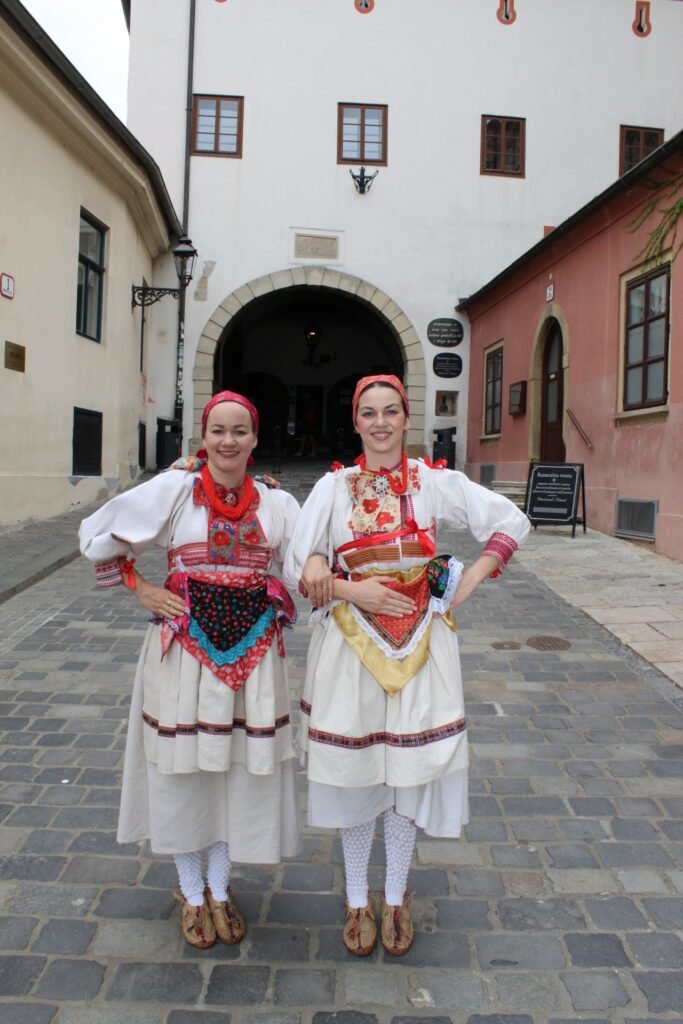
At Folk me up, you get dressed in a traditional Prigorje costume and hear the stories behind each piece. Then you head out on your own one-hour walk through Zagreb, in costume.
The whole experience takes about 2.5 to 3.5 hours, for up to 6 people. We are in Jurišićeva Street, a 5-minute walk from Ban Jelačić Square.
Spending All Saints’ Day in Zagreb? Wear the tradition first.
Sources
- Perić, T. (2016). Tradicijska glazba i običaji sjeverozapadne Hrvatske. University of Zagreb, Faculty of Teacher Education.
- Rajković, Z. (1974). Narodni običaji okolice Stubice. Narodna umjetnost.
- Svi sveti, Wikipedia
- Gradska groblja Zagreb: the first arcades